
How to Start Open Water Swimming in San Francisco This Summer 2026
NockOut Team
If you are searching for how to start open water swimming in San Francisco, beginner open water swimming Aquatic Park, cold water swimming San Francisco Bay, or where to try bay swimming in summer 2026, the biggest challenge usually is not motivation. It is figuring out the safest and most realistic first step.
That matters because San Francisco is one of the few cities where open water swimming is not a niche fantasy. It is a real local sport with durable communities, year-round swimmers, and a protected starting zone in Aquatic Park Cove. But it is still open water. The local clubs are explicit that the bay brings cold shock risk, hypothermia risk, strong currents, boat traffic, and no lifeguards on duty. The right beginner plan has to respect both truths at once: this is an unusually accessible sport here, and it is still serious water.
This guide is built around live first-party details available on Thursday, July 2, 2026 from the Dolphin Club swimming page, the Dolphin Club conditions page, and the South End Rowing Club swimming page. For Nockout readers, the goal is simple: help you move from vague interest to one practical first swim that can grow into a repeatable active-life habit.
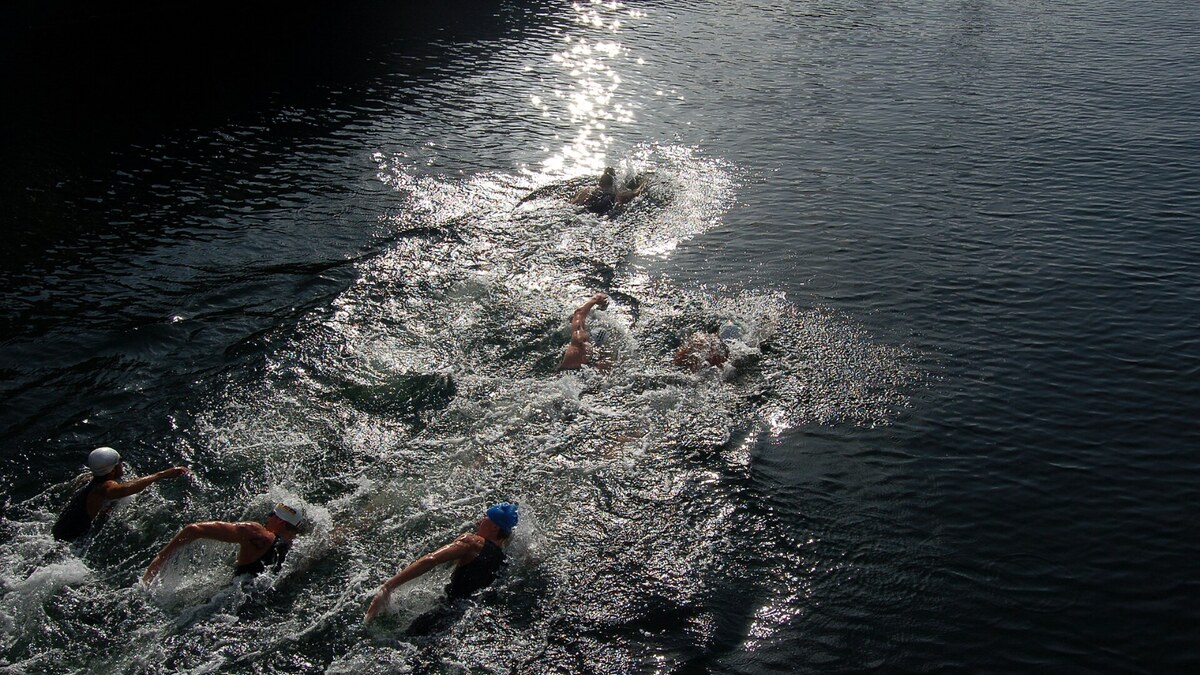 The best first open water swim in San Francisco is usually the one that stays small, visible, and easy to exit. Photo: Danielle/Wikimedia Commons, CC BY-SA 3.0.
Why Aquatic Park Is the Right Entry Point for Beginners
If you want to start open water swimming in San Francisco without jumping straight into the full chaos of the bay, Aquatic Park is the obvious first place to understand. The Dolphin Club says its members swim year-round in Aquatic Park Cove, where the water ranges from about 50 degrees Fahrenheit in January to about 65 degrees Fahrenheit in September. The same page notes a quarter-mile buoy line parallel to shore, which is exactly the kind of structure beginners need. You are still in open water, but not improvising in a random part of the shoreline.
The South End Rowing Club describes the same environment as a protected cove and private beach for easy access. That matters because beginners do better when entry and exit are simple, the swim distance can stay short, and the setting is built around the sport rather than around improvisation.
What Makes San Francisco Open Water Swimming Different From Pool Swimming
If your swimming background is mostly lap pools, the biggest mistake is assuming the open-water version is just the same sport without lane lines. The local club pages say otherwise. South End notes that swimming in San Francisco Bay is challenging because of strong tides, boat traffic, sea life, and water temperatures ranging from under 50 degrees in winter to the low 60s in warmer months. Dolphin adds that swimmers should check tide, current, water temperature, and wind speed before every swim.
Those details change the beginner strategy. Your first goal is not distance. It is adaptation. Can you enter cold water calmly? Can you stay oriented without a black line at the bottom of the pool? Can you judge when you need to exit before your body gets behind the conditions? Open water rewards attention more than ego.
That is one reason this sport fits the Nockout lens so well. Open water swimming is not about pretending you are instantly ready for an Alcatraz crossing. It is about learning a place, learning your limits, and building a sustainable relationship with a local environment that demands respect.
Your Best First Format: Short Cove Swim, Not Big-Bay Ambition
The practical beginner move is to keep your first swim extremely modest. Dolphin explicitly advises that less experienced swimmers and those not acclimatized to cold water should swim close to shore so they can quickly exit. That should drive the entire opening phase of your plan.
A good first session is often closer to a cold-water introduction than a workout. Enter, breathe, settle, swim a short controlled segment, and exit while you still feel composed. If you are coming from pool swimming, that can feel almost too simple. It is not. In cold open water, leaving early is often smarter than proving a point.
San Francisco also gives beginners another advantage: you do not have to invent the structure yourself. Both clubs frame swimming as a community activity. Dolphin says swimmers are encouraged to swim with others, and South End says it regularly offers club swims, sunriser swims, and swim clinics run by member volunteers. That means the best first session is not a solo hero attempt. It is a short, visible cove swim with experienced people nearby and a quick exit plan already in your head.
How to Choose Between Dolphin Club and South End Rowing Club
If you are deciding which club context fits you better, start with access pattern rather than identity. The Dolphin Club says non-members can use public day access on Monday, Wednesday, and Friday, while its neighbors at the South End Rowing Club have public day-use hours on Tuesdays, Thursdays, and Saturdays. That detail matters today: since this run is being prepared on Thursday, July 2, 2026, South End is the more natural public-access lane for the day itself, while Dolphin's page also posts a holiday reminder that there is no public day-use access on Friday, July 3, 2026, or Saturday, July 4, 2026.
South End may feel especially approachable if you want a club framing that emphasizes a protected cove, a private beach for easy access, and a broad community identity around rowing, swimming, handball, and running. Dolphin may feel stronger if you want the most explicit daily-practice guidance, since its swimming page spells out best practices, rewarming habits, visibility tips, and current-check reminders in one place.
You do not need to turn this into a loyalty decision on day one. The smarter question is which access pattern makes it easiest for you to begin safely and come back again next week.
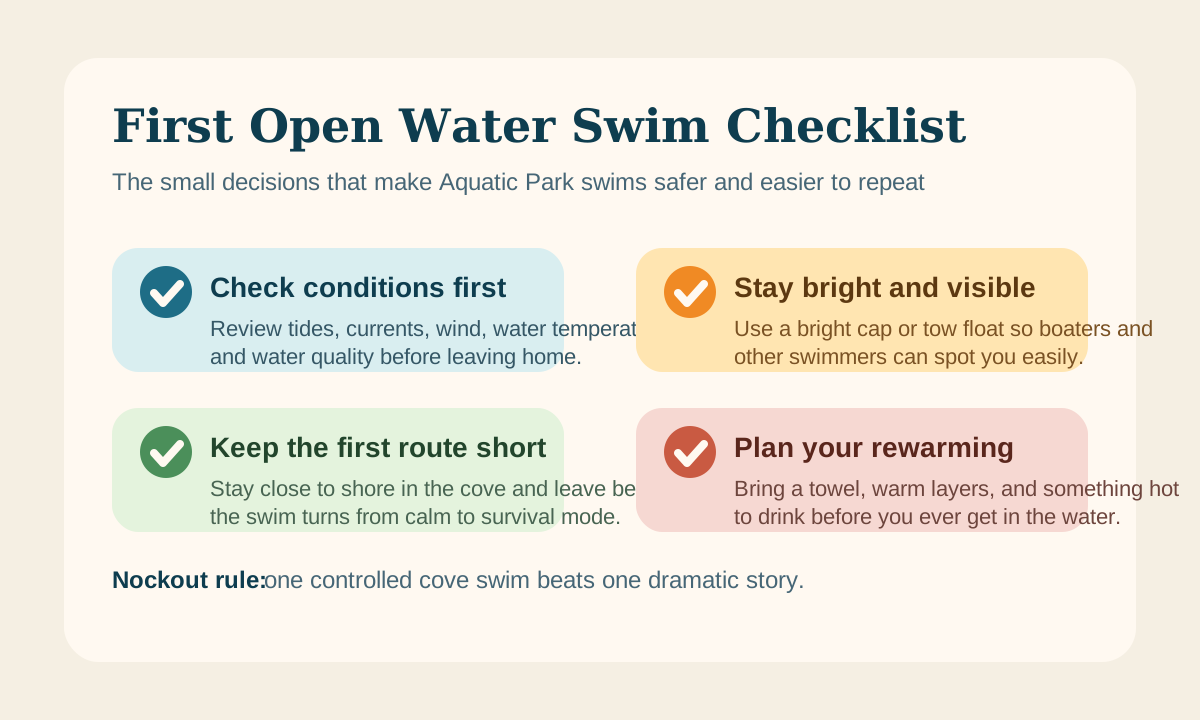 The beginner checklist is simple: visible gear, current check, short route, and a rewarming plan before you get in.
The Safety Checklist That Actually Matters
A lot of beginner advice online gets bloated. The local club guidance is clearer and better. Before your first swim, focus on five things:
- Check conditions first. The Dolphin conditions page points swimmers to current weather, tides, currents, water temperature, and water quality sources. That is not optional homework. It is part of the sport.
- Stay highly visible. Dolphin advises a bright fluorescent cap or inflatable swim buoy, and even a blinky light if you are swimming near dawn or dusk.
- Swim close to shore at first. Their own guidance says less experienced swimmers should stay near an exit route.
- Expect the afterdrop. Dolphin warns that your core temperature can continue dropping after you exit. Bring warm liquids, dry clothes, and a rewarming plan.
- Do not treat this like supervised recreation. Both the environment and the clubs make clear that there are no lifeguards on duty. You are responsible for your own safety.
That checklist is not there to scare you away. It is what makes the sport sustainable. People keep swimming in San Francisco because they build routines around reality, not because they ignore it.
What to Bring for Your First San Francisco Bay Swim
Your first kit does not need to be complicated, but it should be intentional. Bring a bright cap, goggles you already trust, a towel, simple warm layers, and something hot to drink for afterward. If you are more comfortable starting in a wetsuit, the Dolphin FAQ says wetsuits are allowed, while also noting they must come off before entering the building afterward.
How to Turn One Swim Into a Real Habit
The best open water routine is not built around rare epic swims. It is built around frequency. Dolphin's page mentions everything from informal group swims to mileage competitions, while South End describes regular member-supported swims and clinics. The pattern is obvious: the people who last in this sport plug into community and repetition.
For a beginner, that can mean a very simple month-one plan:
- Week 1: Visit Aquatic Park and do one short cove swim with a conservative exit point.
- Week 2: Repeat at a similar duration so your body learns the cold-water rhythm rather than getting shocked by novelty.
- Week 3: Add a little more time only if the first two swims felt calm, not heroic.
- Week 4: Decide whether you want more community structure through a club clinic, regular swim partners, or a formal membership path.
That progression fits Nockout's broader view of sustainable activity. A durable lifestyle is usually built from repeatable local decisions, not dramatic one-off efforts. Open water swimming in San Francisco can absolutely become part of your life, but it gets there one small cove swim at a time.
Final Take
If you want the best answer to how to start open water swimming in San Francisco this summer 2026, begin at Aquatic Park, keep your first swim short, and follow the local clubs' safety culture instead of importing generic internet bravado. The Dolphin Club and South End Rowing Club both point beginners toward the same fundamentals: cold water is real, conditions matter, visibility matters, community helps, and rewarming is part of the swim.
The useful Nockout lens is straightforward. Pick the smallest version of the sport that you can repeat. In San Francisco, that means one careful cove swim, one conditions check, one solid exit plan, and one reason to come back next week.