
How to Start Rowing on San Francisco Bay This Summer 2026
NockOut Team

If you are searching for how to start rowing in San Francisco, learn to row San Francisco Bay, or beginner rowing club San Francisco, the first thing to know is that Bay rowing is real, local, and worth doing, but it is not a casual drop-in sport in the same way pickleball or pickup basketball can be. As of Thursday, June 25, 2026, the clearest official beginner lane comes from the Dolphin Club's Learn to Row page, which says its rowing training is designed to help members learn how to row on San Francisco Bay for fun, fitness, and adventure. The same page is also direct about the challenge: you do not need prior rowing experience to begin, but you do need to be able to swim and be willing to handle wind, waves, and currents.
That honesty is useful. Too much beginner sports content treats every activity like a frictionless lifestyle accessory. Rowing on San Francisco Bay is better than that. It asks more of you, but it also gives more back: hard-earned technique, outdoor focus, a stronger relationship with place, and a community built around actually showing up on the water. For the right person, that is a feature, not a bug.
This guide is built for search intent like rowing San Francisco, learn to row on the Bay, Dolphin Club rowing, and South End Rowing Club beginner rowing. It also fits the Nockout lens. The point is not simply to admire a historic sport from a distance. The point is to help you find a real place to play, understand the access model, and choose a version of rowing that can become a sustainable active-life habit.
 Bay rowing works best when you respect the water first, then build the habit slowly enough to keep it.
Why Rowing Is a Strong San Francisco Sport Right Now
San Francisco has plenty of sports that are easier to sample, but rowing offers a different kind of reward. It combines endurance, rhythm, outdoor exposure, and technical progression in a setting that feels unmistakably local. You are not on a generic machine in a generic room. You are learning a skill in one of the most distinctive urban-waterfront environments in the country.
The current official club language reinforces that this is not a fading legacy activity. On the South End Rowing Club rowing page, the club describes itself as the oldest San Francisco rowing club and says it is dedicated to inclusive and participatory rowing while maintaining the San Francisco Bay rowing tradition. South End also highlights a fleet of more than 30 boats, including wooden rowboats, Whitehalls, fiberglass racing shells, and coastal rowing boats. That matters because it shows real local depth. Bay rowing is not a novelty. It is a live ecosystem with history, equipment, races, and community structure behind it.
Dolphin Club adds the more beginner-practical side of the picture. Its current site describes a volunteer-led community of 1,800+ members centered at Aquatic Park, with members who swim, row on the Bay and Lake Merced, paddle, run, and participate in broader club life. For a Nockout reader, that combination is compelling. The sport is specific enough to feel meaningful, but the community is broad enough that you do not have to build your whole identity around racing to belong there.
The Best Beginner Entry Point: Dolphin Club
If your goal is to actually start, Dolphin Club is the clearest official first step right now. Its Learn to Row page says introductory orientation classes cover the basics of rowing, boat care, dock operation, and the tides, currents, and safety aspects of San Francisco Bay. Training is typically offered monthly and is available only to members. That monthly-orientation model is important because it turns rowing into a real commitment rhythm instead of a one-off tourist experience.
The club's Request Training page makes the process even clearer. Before using any boat at the club, you need orientation. Training is largely member led, and people are added to a waitlist and notified as orientations are scheduled. The form also asks what kind of craft you want training on, including wooden row boats, lightweight row boats, team rowing, and rowing at Lake Merced. That tells you two useful things: first, the club expects real demand; second, there is more than one rowing lane once you are inside the system.
Dolphin is also honest that the Bay is not a beginner-proof environment. The Learn to Row page says rowing here can be strenuous and challenging and that you should expect to deal with wind, waves, and currents. That is exactly the kind of realism beginners need. If you want something soft and frictionless, choose another sport. If you want a hard-earned skill with real outdoor texture, that difficulty is part of why rowing feels so satisfying once it clicks.
How Progression Works After Your First Orientation
One reason rowing can feel intimidating is that people assume the first lesson should unlock the whole sport. Dolphin's current site shows a better model. Orientation is only the first stage. After that, the club says new rowers should practice inside the cove to get comfortable behind the oars. From there, members can build experience by piloting club swims, joining team-rowing outings, and eventually working toward certification.
The certification checklist on the Learn to Row page is especially useful because it makes the path legible. The club says rowers need to practice inside the cove, learn Bay safety and pass a written test, get a USRowing membership, attend at least one Tuesday Boat Shop event, and complete an on-the-water certification row with a certified member instructor. That is more structure than most beginner sports require, but it also means the sport has a real developmental ladder. You are not guessing your way into competence.
The payoff for that structure is range. Dolphin says rowers frequently organize outings to places including the Golden Gate Bridge, Alcatraz, the Ferry Building, McCovey Cove, Treasure Island, and Angel Island. In other words, the reward is not only exercise. It is a new way of seeing the Bay.
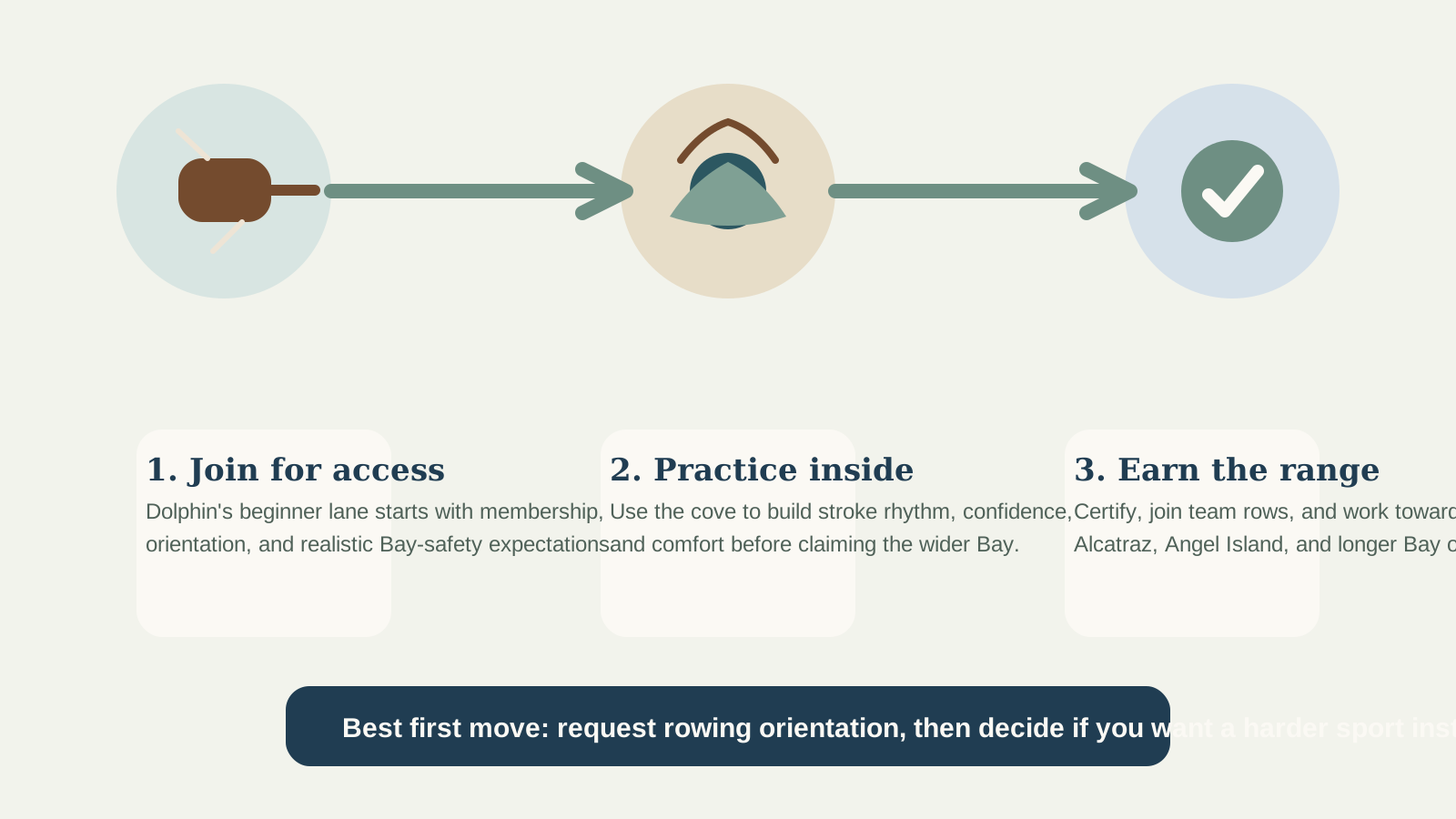 The smartest first rowing plan is simple: join, orient, practice inside the cove, then earn the wider Bay.
Where South End Fits In
South End Rowing Club matters because it shows what the deeper Bay-rowing ecosystem looks like, but it is not the easiest first move for a brand-new rower. Its official rowing page is explicit that, because of both fleet limitations and the challenges of rowing in the Bay, rowing at South End is only available to members. The club also says it does not have rowing facilities, boats, classes, clinics, or lessons available to the public, and day users may not use row boats or kayaks.
That can sound discouraging if you are coming from a more open rec-sports model, but it is better to know the truth early. South End is not a casual public sampler. It is a serious historic club environment. For people who already know they want a long-term Bay rowing community, that may be a positive signal. The site highlights major regattas such as the Bridge to Bridge Regatta, the Norm Petersen Regatta, the Tom & Jerry Three Buoy Regatta, and the Wooden Boat Classic Regatta. If your imagination is pulled more by tradition, fleet depth, and open-water culture than by a slick fitness funnel, South End has real weight.
The practical takeaway is simple: treat Dolphin as the clearer beginner ramp and South End as part of the bigger Bay-rowing horizon. You do not need to choose your forever club on day one. You need to choose the next credible step.
What About Lake Merced?
Dolphin's Lake Merced page adds an important nuance. The club says its small boathouse there has a half-dozen flat-water shells, but rowing from that location is available for experienced rowers only and orientation is not currently available there. That means Lake Merced is not your shortcut around the Bay-learning process. It is more like a later-stage option once you already have rowing competence.
That is a useful expectation reset. Beginners often assume the calmest-looking water is the easiest place to begin. In practice, the local club structure matters more than appearances. The official beginner lane right now is still the member-led orientation process tied to Aquatic Park and Bay safety, not a self-directed first session at Lake Merced.
How to Decide If Rowing Fits Your Life
The best reason to start rowing in San Francisco is not that it is trendy. It is that you want a sport with a strong sense of place, technical depth, and repeatable community. The best reason not to start is if you want pure convenience. Bay rowing asks for patience. There may be a waitlist. You will need membership. You will need comfort in the water, respect for safety, and enough humility to practice before claiming competence.
But if that sounds attractive rather than annoying, the sport may fit you unusually well. Rowing is excellent for people who want movement that feels immersive and skill-based. It is also strong for adults who are tired of indoor fitness loops and want a harder reset: colder air, more focus, less phone time, more place awareness.
That is the Nockout case for this sport. A good active-life habit is not only about calories or aesthetics. It is about finding a place to play that changes how your week feels. For some people, San Francisco Bay rowing will do that faster and more deeply than a dozen easier options.
The Best First Move This Week
If you want the simplest credible next action, do this: read the Dolphin Club Learn to Row page, make sure the swim requirement and Bay conditions feel realistic for you, and then use the Request Training form as soon as you are comfortable with membership. Do not over-optimize beyond that. You do not need to buy a romantic story about rowing. You need one concrete step toward orientation and one honest decision about whether this is the kind of challenge you want in your life this summer.
If the answer is yes, San Francisco already has the water, the history, and the club infrastructure. Your job is just to get on the path.