Best After-Work Fitness Communities in San Francisco for Startup Workers This Summer 2026
Subramanya N
Co-Founders
If you work in San Francisco startups, the old after-work default was easy to predict: drinks, another dinner, or a social plan that left everyone more depleted than restored. In June 2026, that pattern is changing. The shift is not theoretical anymore. Men's Fitness reported on May 27, 2026 that younger professionals are increasingly replacing nightlife with run clubs, community workouts, and movement-based gatherings built around connection and routine. Two days later, Global Running Day officially landed on Wednesday, June 3, 2026, reinforcing how visible social fitness has become.
That national momentum lines up with a real local opportunity. San Francisco already has the ingredients startup workers usually need: public pickleball access, adult rec leagues, race communities, climbing gyms, and new hybrid wellness spaces that fit around work rather than competing with it. The problem is not finding a theoretical reason to move more. The problem is choosing an after-work format that feels realistic on a Tuesday.
This guide is built for that practical search intent: after-work fitness San Francisco, fitness communities for startup workers, adult sports San Francisco, and social wellness San Francisco. If you want something healthier than another low-energy happy hour, here is where the current momentum is, what formats actually work, and how to pick a community you will still show up for in July.
 San Francisco's strongest after-work routines now mix movement, community, and schedules that still make sense after a full workday.
Why Social Fitness Is Hitting Different in June 2026
The timing matters. Global Running Day just passed on June 3, 2026, and it did what these calendar moments often do: it made everyday movement feel culturally current instead of privately aspirational. That is useful, but the deeper shift is bigger than one day. SFIA's 2026 participation report says a record 250 million Americans participated in at least one sport, fitness, or outdoor activity in 2025, even though many still do not meet the recommended activity threshold. In other words, interest is high, but consistency still needs infrastructure.
That is where community matters. The current social-fitness wave is not just about burning calories. It is about reducing friction. If a run club gives you a start time, a pickleball session gives you a court, and a league gives you recurring teammates, then movement becomes easier to repeat. For startup workers, that matters more than perfect programming. Most people do not need a heroic transformation plan. They need one active format that survives a product launch, a recruiting week, or a late customer call.
San Francisco is especially good for this because you do not have to choose between hard-core athletic culture and total isolation. The city now supports multiple entry points, from public-court play to structured rec leagues to newer wellness spaces designed for people who still need Wi-Fi, recovery, and a reason to leave their laptop bubble.
1. Join a Run Community If You Want the Lowest-Friction Entry Point
For most startup workers, running remains the easiest place to start because the setup cost is low and the scheduling is flexible. You do not need to learn a technical ruleset before your first session, and you can scale the intensity up or down depending on your week. That is a big reason run communities keep growing.
The signal from Global Running Day is useful here, but the practical reason matters more: run communities create structure without demanding perfection. You can show up for a short social run, build toward a 5K, or use a bigger event as motivation without needing to reorganize your whole identity around endurance training.
If you want a milestone on the calendar, San Francisco race infrastructure helps. The San Francisco Half Marathon site shows the event returned on February 1, 2026, and the city's larger running ecosystem keeps that culture visible year-round. For startup workers, the best play is usually not "train for something huge immediately." It is finding one recurring community run or one accountability partner, then using a race date later if the routine sticks.
This route also works well for people who feel socially rusty. Run communities often combine movement with coffee, conversation, and low-stakes repetition, which is exactly why they are increasingly replacing passive nightlife habits. If your main blocker is energy, not ambition, running is still the cleanest first move.
2. Choose Pickleball If You Want a Social Sport Without a Giant Learning Curve
Pickleball keeps winning because it solves two problems at once: it is easy enough for beginners to join quickly, and it is social enough that the session still feels like a plan rather than a workout obligation. For startup workers who want something active but less solitary than running, this is often the better fit.
San Francisco also has unusually good public access right now. The current SF Recreation and Park pickleball directory lists multiple outdoor options with meaningful scale, including Larsen with eight dedicated open-play courts, Louis Sutter with six dedicated open-play courts, and Upper Noe, where paddles and balls are available to borrow during listed hours. That kind of public infrastructure matters because after-work habits die quickly when logistics are annoying.
The other reason pickleball works for startup schedules is that you do not need the perfect group composition to get started. You can join a beginner-friendly open-play environment, rotate through games, and meet people without the emotional overhead of organizing a full team. That is a major advantage for people who are new to the city, recently switched jobs, or do not want every social plan to depend on their coworkers.
If you are choosing between running and pickleball, the simplest filter is this: pick running if you want maximum flexibility, and pick pickleball if you want more built-in conversation and easier partner rotation.
3. Use Adult Rec Leagues If You Miss Team Energy
Some people do not want another solo or semi-solo wellness habit. They want the accountability and momentum that only comes from a team. If that is you, adult rec leagues are still one of the best after-work formats in San Francisco, especially if work has been making your weeks feel repetitive.
Volo's current San Francisco page makes the local timing concrete. As of Friday, June 5, 2026, the site is listing current leagues, pickup formats, and upcoming events built for busy adult schedules, including activities on weeknights and weekends. The page also highlights how these formats are designed around community and camaraderie, not just competition. That distinction matters. Startup workers usually do not need another environment where every session feels like performance review theater.
The best league choices for after-work life are usually the ones with low setup anxiety: volleyball, kickball, soccer, or other sports where you can contribute even if you have not played seriously in years. If your social life has narrowed to work friends and Slack threads, a rec league can widen your week fast. You start recognizing teammates. You stop defaulting to the same bars. You end up with movement that feels social rather than dutiful.
This is also one of the strongest Nockout-aligned pathways. People rarely sustain activity because they were given more wellness content. They sustain it because they found a place to play and a reason to return.
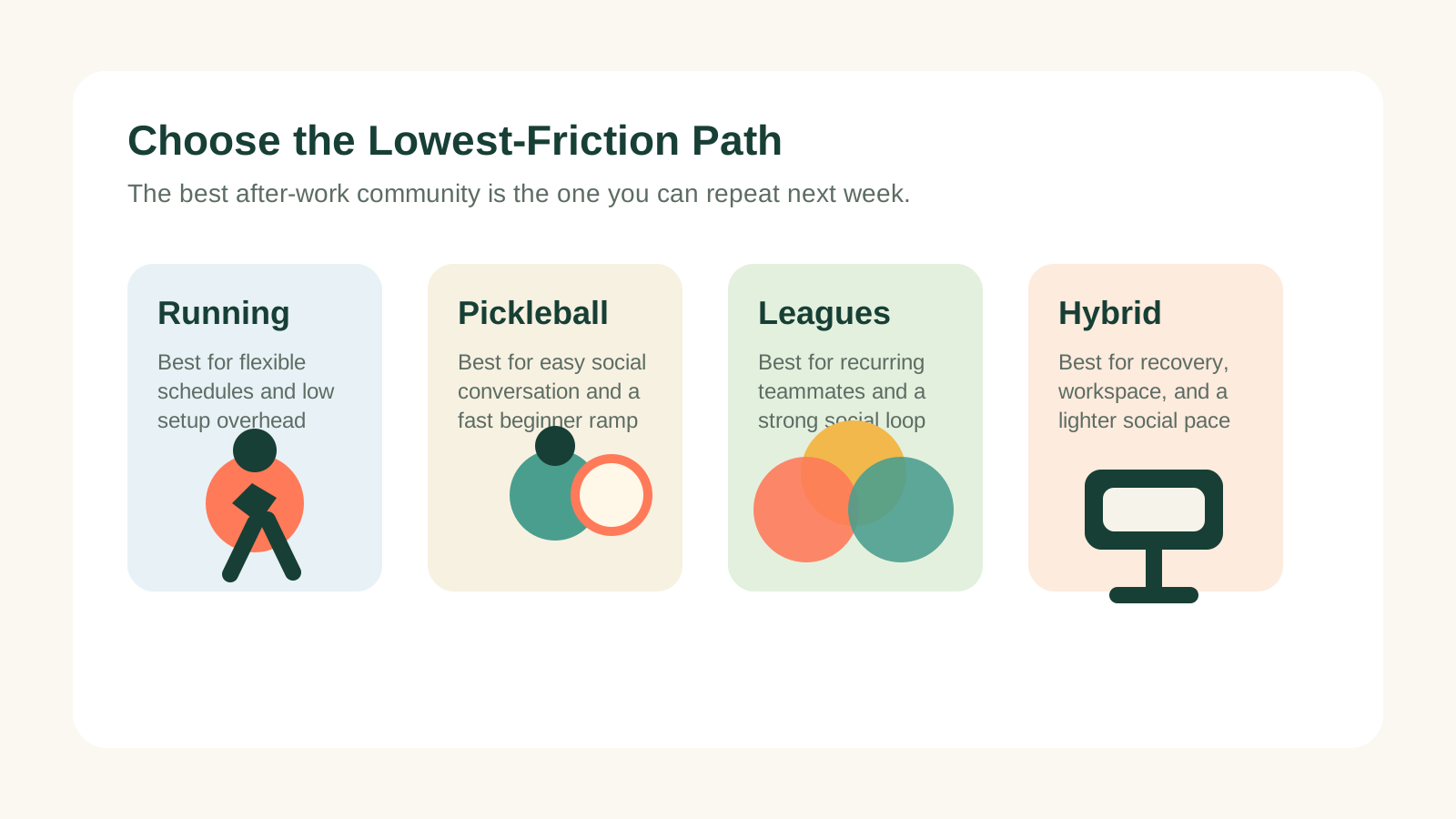 The right after-work fitness format depends less on motivation and more on how much coordination overhead you can realistically tolerate.
4. Try Hybrid Wellness Spaces If You Need Recovery, Work Flexibility, and Community in One Place
Not every startup worker wants a sport-first routine. Some want movement plus recovery plus a place to decompress before heading home. That is where hybrid wellness spaces are starting to matter more.
One current local example is MNT Mission Rock, which is advertising an opening in Summer 2026 with reformer Pilates, heated mat classes, contrast therapy, workspace, and community events in one setting. For people who work near Mission Rock, SoMa, or downtown-adjacent offices, that format is interesting for a specific reason: it treats wellness as part of an after-work rhythm instead of a separate errand.
This matters for founder and startup-worker behavior more than it might sound. A lot of people do not skip movement because they hate exercise. They skip it because the transition cost is too high. Going from laptop mode to transit to gym to home can feel like too many decisions. A hybrid space lowers that barrier by combining movement, recovery, and practical amenities like workspace and reliable Wi-Fi.
If your schedule is unpredictable or your nervous system already feels overloaded, this category can be more sustainable than forcing yourself into a high-energy team plan every week. It is still social, but it leaves more room for recovery.
How to Pick the Right After-Work Fitness Community
Do not choose based on what sounds impressive. Choose based on what matches your week.
- Pick running if you need the cheapest, most flexible option and you are comfortable with self-directed movement.
- Pick pickleball if you want easy conversation, low intimidation, and a strong beginner path.
- Pick a rec league if you miss team energy and want a recurring social structure outside work.
- Pick a hybrid wellness space if recovery, flexibility, and lower stimulation matter more than competition.
The smartest first step is usually to choose one format for four weeks rather than sampling everything at once. Momentum comes from repetition, not novelty overload. If you are a founder or early employee, this matters even more because your schedule will try to crowd out anything that is not already anchored.
Common Mistakes Startup Workers Make
- They choose based on aspiration instead of logistics: the best community is the one you can still reach after a rough workday.
- They over-index on coworkers: a great after-work routine usually expands your world beyond your immediate team.
- They pick only high-intensity options: some weeks call for competition, others call for recovery or low-pressure social movement.
- They treat one missed week as failure: sustainable wellness is built around returning, not staying perfect.
Those mistakes are common because startup culture rewards intensity. But fitness that lasts usually comes from lower-friction consistency. That is the real opportunity in San Francisco right now. The city already has enough public courts, race culture, leagues, and new wellness formats to support different kinds of active life. The harder question is whether you pick one that fits your actual capacity.
Final Take
As of Friday, June 5, 2026, San Francisco startup workers do not need to settle for another default happy hour if what they really need is movement, connection, and a more durable weekly rhythm. Social fitness is not just a national trend headline anymore. It is visible locally through public pickleball access, adult rec leagues, run culture, and new hybrid wellness spaces built around community.
If you want the simplest next step, pick one format and make it recurring before next Friday. Choose the run, the court, the league, or the recovery-forward studio that removes the most friction from your life. The best after-work fitness community is not the most optimized one. It is the one that gets you off the screen and back into a real place with real people, often enough to matter.