Best Free and Low-Cost San Francisco Sports Programs for Summer 2026
NockOut Team
If you are searching for free and low-cost sports programs in San Francisco, this is a strong week to act. On Sunday, June 21, 2026, the live San Francisco Recreation and Park recreation-programs page is actively promoting Summer 2026 offerings, from outdoor Zumba drop-in classes to youth sports and court-sport access. The same city system is also pointing residents to its Recreation Scholarship Program, which can reduce registration costs by at least 50% and up to 100% for eligible San Franciscans. That combination matters because it changes the question from "Can I afford to get active?" to "Which lane fits my life best right now?"
This is one of the better local-search topics for Nockout because the practical barrier is rarely motivation alone. People want movement, community, and a healthier routine, but they often assume city sports are either hard to access, built only for kids, or quietly expensive. San Francisco is more open than that. Right now, the city has a mix of fully free outdoor options, public-court infrastructure, and scholarship-backed paid programs that make a real return to activity possible without needing a private gym budget.
This guide is built for search intent like free sports programs San Francisco, low-cost fitness classes San Francisco, affordable youth sports San Francisco, and how to get active in San Francisco this summer. The goal is not to list everything. The goal is to show which city-backed options are actually useful, who they fit best, and how to turn one good idea into a repeatable Nockout-style habit.
 San Francisco's best low-cost sports options work when you match your budget, schedule, and social energy to the right public program.
Why This Is a Better Summer Than Usual to Start
The city's live summer programming is giving residents a clear signal to move now instead of vaguely "later." The main SF Rec page says Summer 2026 has arrived with longer days and new ways to get out, create, and connect. For sports and wellness, that matters because summer lowers the friction on everything: more daylight, easier outdoor meetups, and a wider range of drop-in and seasonal programs.
There is also a practical access story underneath the seasonal energy. The Recreation Scholarship Program is not a cosmetic add-on. The city's live scholarship page says eligible San Francisco residents can receive 50%, 75%, or 100% support on program registration depending on need, with coverage spanning athletics, aquatics, outdoor recreation, and more. If cost has been the quiet reason you have not joined a class, league, or youth program, this is one of the most important local details to know.
Another reason this matters is that San Francisco's system is not one sport or one neighborhood. It is a portfolio. Some people need a free outdoor class. Some need a public court they can book. Some need a structured youth program with community roots. Others need a route into sports that does not require buying gear, organizing a friend group, or pretending they already know where they belong. The city's summer setup gives all of those people more than one entry point.
Best Free Option for Adults: Zumba in the Parks
If you want the cleanest free answer, start with Zumba in the Parks. The city's live page says all outdoor classes remain free and lists a weekly schedule across San Francisco, including Golden Gate Park, Civic Center Plaza, Hilltop Park, Upper Noe, and other neighborhood sites. That matters because it removes the two biggest beginner barriers at once: cost and social awkwardness.
Zumba is especially useful for people who want movement without the pressure of team selection, sports-specific skill, or league logistics. You show up, follow along, and get a real workout in a public setting that feels lighter than a private studio. For adults trying to rebuild a routine after a long work-heavy stretch, that can be more sustainable than jumping immediately into a competitive format.
The page also gives a good cost ladder for people who want more structure later. Indoor passes are listed at $5 for a single class, $40 for a 10-class pass, and $50 for a monthly unlimited pass. That is exactly the kind of public-price transparency that helps someone choose a realistic rhythm instead of stalling on the decision.
Best Free Social-Sport Option: Pickup Volleyball in Golden Gate Park
If you want a more social game format, the city-managed pickup volleyball guidance is still one of the best public-sports entry points in San Francisco. The official page says there are four designated areas where people can play volleyball without needing a permit, and that the open areas rotate every other month to protect the turf. For the current month cycle, the city lists Robin Williams Meadow and parts of Upper Big Rec Fields, while also noting one Upper Big Rec section is closed because of turf damage.
That detail matters because it tells you the city is actively managing demand, not leaving people to guess. It also signals that volleyball is not a fringe activity here. SF Rec is reviewing expanded locations citywide, including places like Mission Bay and Mariposa Park, and says it is open to adjusting net capacity at some sites. That is the kind of live operations detail that usually points to strong community use.
If volleyball is the sport that feels most fun to you, read this post alongside our deeper guide to pickup volleyball in San Francisco this summer. The short version is simple: this is one of the best low-cost social sports in the city if you like casual outdoor energy and do not need heavy structure on day one.
Best Public-Court Option: Tennis and Pickleball
For people who want more control over time and format, the city's Tennis and Pickleball page is one of the strongest practical resources in the whole system. The live directory lists a long network of tennis courts across the city, from Alice Marble and Balboa Park to McLaren Park, Mountain Lake Park, and Rossi. The same page also points users to pickleball court directories, booking instructions, and lessons.
That matters for two reasons. First, public-court access gives you flexibility. You do not need to wait for a full league season to start. Second, tennis and pickleball fit different kinds of active lifestyles. Tennis is useful if you want more repetition, skill-building, and individual focus. Pickleball is useful if you want shorter learning curves, easier conversation, and a friendlier social ramp.
San Francisco already has a strong case for both sports. Earlier this month, we covered why public-court and beginner access make tennis and pickleball unusually workable here. What the city directory adds is scale. You are not dealing with one lucky neighborhood court. You are dealing with a real civic network.
Best Youth Soccer Option: Bayview United
For families, one of the most important free options on the live SF Rec system is Bayview United Soccer Club. The city describes it as San Francisco's first primarily Black youth soccer team for boys and girls in grades K through 8. The page also makes clear that it is a free, equity-driven initiative based at Youngblood Coleman Playground and open to players of all backgrounds and skill levels.
This is a strong example of why "affordable sports" should not be reduced to discounts alone. Access also means cultural welcome, neighborhood relevance, and an environment where a kid does not need to arrive already polished. For families in Bayview-Hunters Point, or for anyone looking for city-backed youth soccer with a clear community mission, Bayview United stands out as a meaningful entry point.
It also connects well to Nockout's broader lens. The best sports experiences are not only about exercise. They are about belonging, confidence, and knowing there is a real place for you to show up again next week. Programs like this create that bridge.
Best Baseball and Softball Path: Giants Community Fund Academy
On the baseball and softball side, the city is pointing residents to the Giants Community Fund Academy Baseball and Softball page. The live text says registration for Summer 2026 opened on April 1, 2026 and directs people to the Giants Community Fund Academy site for more information. That matters because it gives families a current action window instead of a vague "check back later" loop.
Baseball and softball can feel harder to enter than court sports because they often require more gear, more field coordination, and more planning. Programs like this help lower that barrier by organizing the pathway. If your household is trying to choose between baseball, softball, and other youth sports this summer, a structured academy route is often more realistic than trying to self-organize from scratch.
For adults, the baseball conversation in San Francisco still has spillover energy too. If the sport is on your mind because of the broader summer season, our recent post on College World Series buzz and how to start baseball in San Francisco is the better companion read. For families, though, the Academy page is the more practical move.
Best Skill-Development Option for Youth Soccer Players: Jose Coronado Futsal
If your child is already soccer-curious and you want a development-oriented path, the Jose Coronado Futsal League is worth knowing. The city's page says the 2026 season included boys, girls, and co-ed teams from 5U to 16U in recreational, intermediate, and advanced divisions across city rec centers. Team registration is listed as full, but the page explicitly says people can still register as free agents if teams need additional players.
That free-agent detail matters because it lowers a common family barrier: assuming you need a full private team before your child can join. You often do not. Futsal is also one of the best environments for touch count, fast decision-making, and technical confidence, especially for players who may later want to move into outdoor soccer with a stronger skill base.
The city page is unusually clear about the developmental value too. It describes futsal as a smaller-sided game that helps build dribbling, passing, ball control, shooting, and quick thinking. For families choosing between general activity and sport-specific growth, that makes the league a strong strategic option.
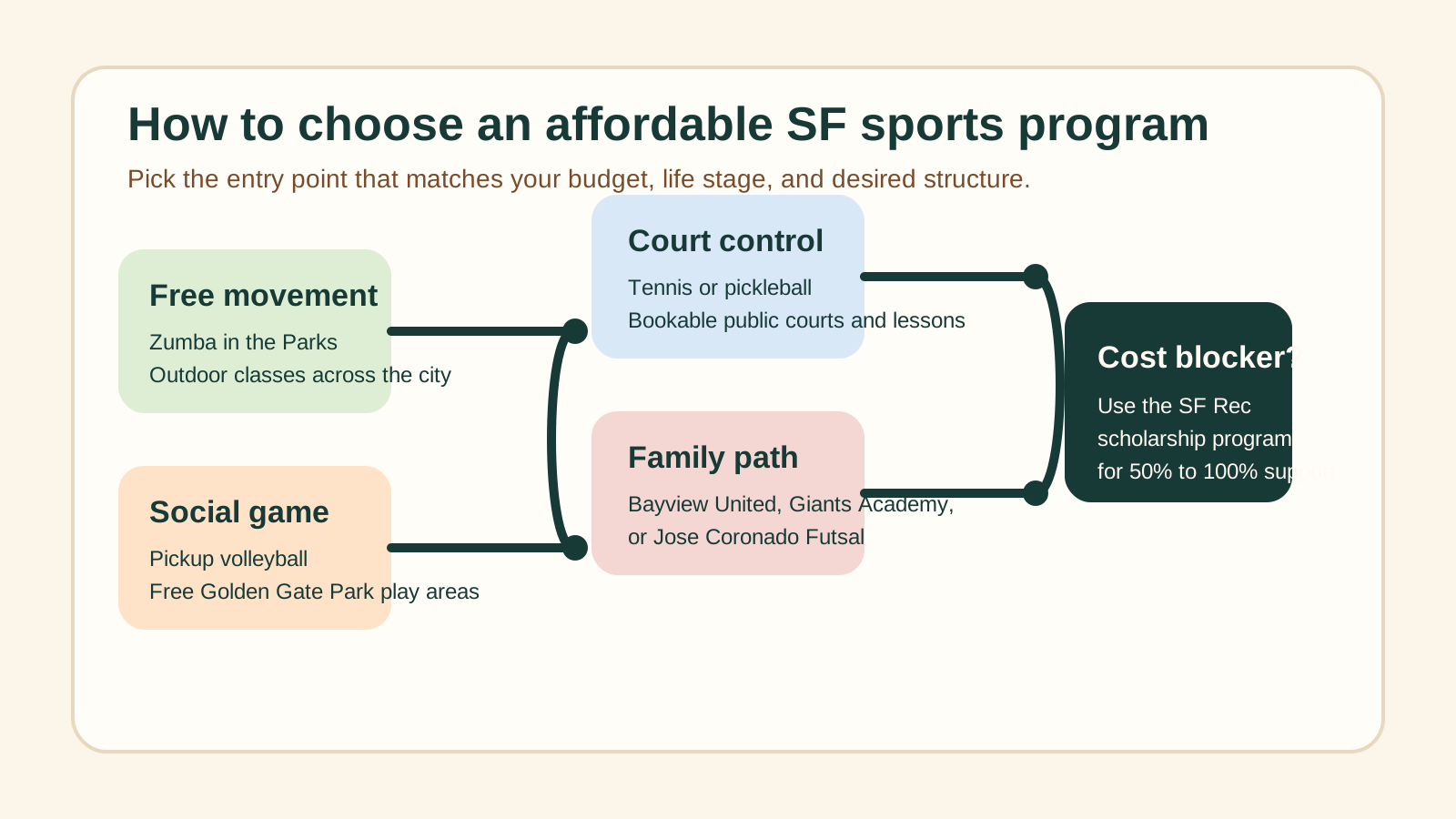 The easiest low-cost sports routine is usually the one that matches your life stage first, then your ideal sport second.
How to Choose the Right Low-Cost Program
The best choice depends less on trendiness and more on repeatability.
- Choose Zumba if you want free movement, low planning overhead, and a beginner-friendly public setting.
- Choose pickup volleyball if you want a social outdoor sport and do not mind flexible park conditions.
- Choose tennis or pickleball if you want public infrastructure, schedule control, and a sport you can revisit often.
- Choose Bayview United or the Giants Academy if you are solving for a child or family routine, not only your own.
- Use the scholarship program if cost is the main blocker to classes, lessons, or structured city recreation.
That last point is the most overlooked. A lot of people search for "free" when what they really need is "financially workable." San Francisco's scholarship system exists for exactly that gap. The city says approval can take up to two weeks, so if you think you may need support later this summer, start that process early rather than waiting for the perfect program to appear.
Final Take
The best free and low-cost San Francisco sports programs in summer 2026 are not hidden. They are live right now through the city's own recreation system. SF Rec is actively promoting summer programming, pointing residents toward free outdoor Zumba, maintaining public volleyball guidance in Golden Gate Park, operating broad tennis and pickleball access, and linking families to youth soccer, futsal, baseball, and softball options. The scholarship program makes that network even more usable for residents who need cost support.
If you want the easiest adult starting point this week, pick Zumba in the Parks or a public-court sport. If you want a stronger social game, use pickup volleyball. If you are trying to make summer more active for a child, look closely at Bayview United, the Giants Community Fund Academy, or Jose Coronado Futsal. The main Nockout lesson is simple: the city already has the places to play. The real move is choosing one you can actually repeat.