
How to Start Playing Tennis in San Francisco This Summer 2026
Subramanya N
Co-Founders
If you have been feeling a little more tennis-curious this week, that is not random. As of Thursday, June 4, 2026, Roland-Garros is deep into its final stretch, and the tournament has an unusually open feel. The official French Open site noted on Wednesday, June 3, 2026 that the men's draw had been blown open enough that a new champion was guaranteed. That kind of moment tends to pull casual fans back toward the sport. It makes tennis feel less distant, more current, and easier to imagine doing yourself.
In San Francisco, that timing lines up with something practical: summer tennis programming is already live. San Francisco Recreation and Park's current tennis directory shows a wide spread of city courts, from neighborhood single-court sites to larger hubs such as Goldman Tennis Center with 16 courts. Lifetime Activities' Summer 2026 adult tennis schedule at Goldman also started this week, with current session dates beginning June 1 through June 7 depending on the class day. That means the real question is not whether tennis exists in San Francisco. It is which entry lane fits your life.
This guide is built for the actual search intent behind terms like tennis lessons San Francisco, public tennis courts San Francisco, and how to start playing tennis in San Francisco. Here is what is current in June 2026, how beginners should think about classes versus public-court play, and how tennis fits the Nockout mindset of finding a sport you can keep doing.
 Tennis is having a timely June moment, but the real win is turning that moment into a repeatable San Francisco routine.
Why Tennis Feels Especially Timely Right Now
Some sports require a lot of local explanation before they become relevant. Tennis does not right now. The French Open is already creating that relevance. Roland-Garros' official coverage this week described the 2026 tournament as unusually open after early exits from some of the sport's biggest names, which is exactly the kind of storyline that pulls people back into watching matches, highlights, and rec play conversations.
For beginners, that matters because motivation is usually easier when the sport already has cultural momentum. But momentum only helps if the local infrastructure is clear. San Francisco is stronger on that front than many people realize. SF Rec and Park's tennis directory currently lists courts across neighborhoods including Dolores, Balboa, McLaren, Alice Marble, Mission Creek, and more. That range matters because a sport becomes sustainable when it is not trapped inside one elite facility or one private-club culture.
The city also has a very obvious anchor venue. SF Rec and Park's directory lists Goldman Tennis Center in the Sunset with 16 courts, lights, and reservations. For a beginner, that density matters. More courts usually means more structured programming, more chances to find the right level, and less pressure to manufacture your own tennis ecosystem from scratch.
The Best First Step: Take a Beginner Class Before You Obsess Over Gear
If you are brand new, the best move in San Francisco is usually not buying expensive equipment or trying to decode competitive levels on day one. It is joining one clear beginner-friendly class first.
Lifetime Activities' current San Francisco adult tennis page breaks levels down in plain English. Its Advanced Beginning description is for players building on an initial session of beginner tennis, while Intermediate expects more consistent rallying and serving. That matters because one of the easiest mistakes new players make is choosing a level based on athletic confidence instead of actual tennis reps. Tennis is technical enough that general fitness helps, but it does not replace repetition.
The current Summer 2026 adult tennis schedule at Goldman shows active class blocks running throughout June, July, and August, with multiple evening and weekend options. As of today, that includes classes beginning on Thursday, June 4, Friday, June 5, Saturday, June 6, and Sunday, June 7, with resident pricing posted directly in the schedule.
Classes also solve a real psychology problem. Tennis can feel intimidating when you imagine yourself showing up to an empty court not knowing how to serve, score, or rally. A structured beginner class removes that awkwardness. Someone feeds balls. The court is assigned. The progression is already designed. You do not have to invent a system before you have even hit ten forehands.
Which San Francisco Tennis Venues Matter Most for Beginners
You do not need to know every court in the city. You need to know which types of venues fit different starting points.
Goldman Tennis Center is the most obvious place to start if you want structure. It is the city's largest current public-court tennis hub in the SF Rec and Park directory, and it is where Lifetime Activities runs the summer lesson grid. If your biggest blocker is not knowing what to do first, Goldman is the cleanest answer.
Dolores Park tennis courts matter for a different reason. SF Rec and Park's directory lists six total courts there, split between reservable and walk-up access. That balance is useful for people who already have one hitting partner and want a more neighborhood-centered tennis habit without needing a giant facility every time.
Alice Marble is worth knowing because it captures another side of San Francisco tennis: public courts with real city identity. Rec and Park describes the site as a four-court facility and notes Alice Marble's place in tennis history as a former world No. 1 who played often in Golden Gate Park after moving to San Francisco as a child. That is not just trivia. It is a reminder that public tennis in San Francisco has deep roots, not just recent trend energy.
If you need coaching and scheduling help, start at Goldman. If you already have a friend to hit with and want a more flexible neighborhood loop, start learning the reservable and walk-up mix at places like Dolores or Alice Marble.
Classes, Walk-Up Courts, or Match Play: How to Choose the Right Lane
A lot of beginners treat tennis as if there is one correct starting sequence. There is not. There are three useful lanes:
- Class first: best if you need instruction, rhythm, and confidence.
- Court first: best if you already have a partner and want a cheaper, lower-commitment routine.
- Match play later: best after you can reliably rally, serve, and keep score without stress.
This is why it helps that Lifetime Activities describes its levels clearly and that SF Rec and Park shows where reservable versus walk-up courts exist. Those two pieces together let you build a progression instead of guessing. Start with a class. Add a second weekly hit on a public court. Think about round robins or leagues only after tennis starts feeling familiar.
If you move too fast into match play, the sport can feel more discouraging than energizing. That is especially true in a city where schedules are already fragmented. The first goal is not to prove you belong. It is to make the second session easy enough that you actually come back.
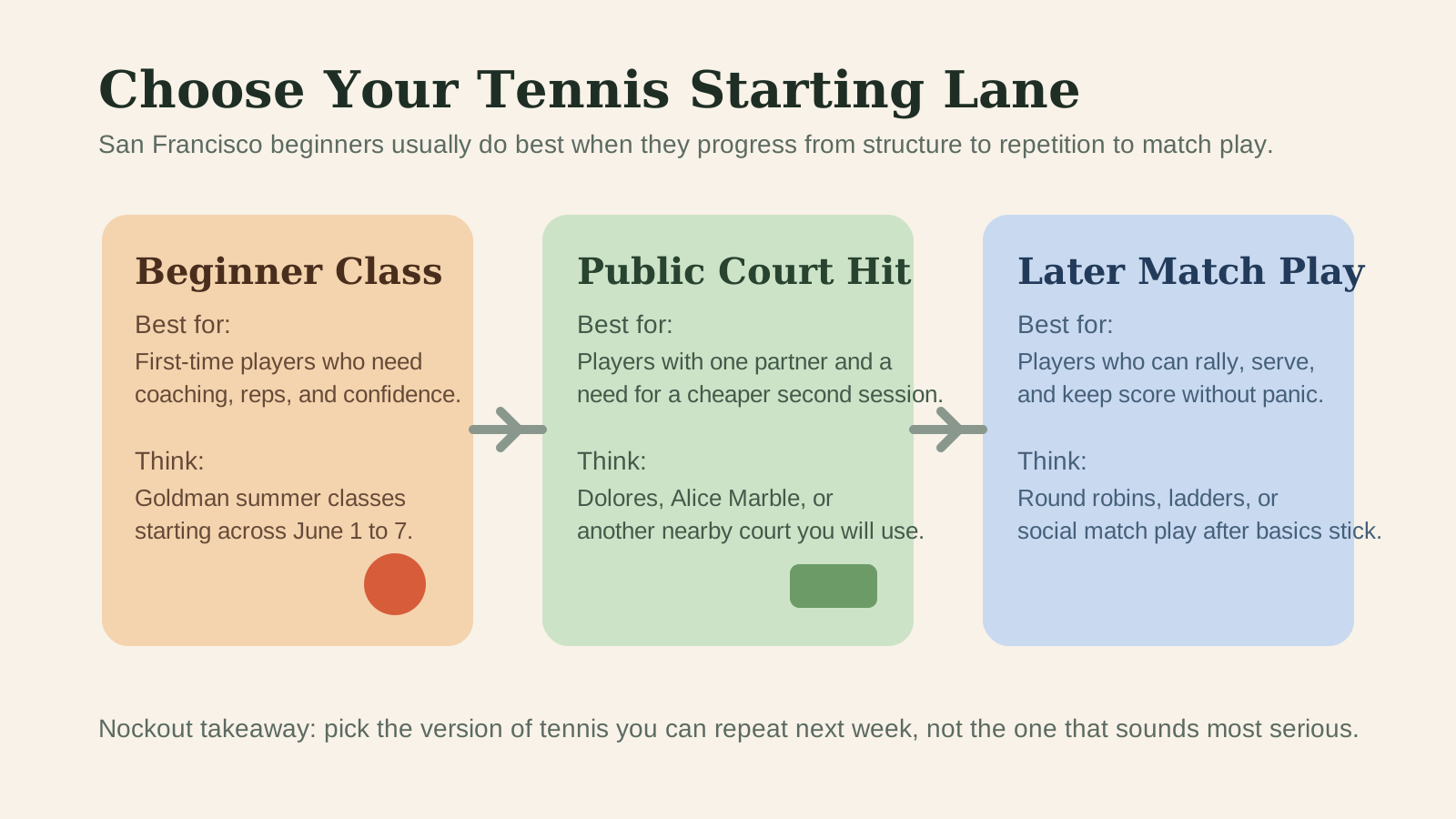 The best tennis entry point is the one that turns one hit into a weekly habit.
What You Actually Need for Your First Month of Tennis
Beginner tennis is easy to overcomplicate. For the first month, you need surprisingly little:
- A decent starter racket, not a premium identity purchase.
- Court shoes or stable athletic shoes with enough grip for lateral movement.
- Tennis balls if you are hitting outside a class.
- A recurring time slot, because the schedule matters more than the accessories.
Most adults do not fail at tennis because they bought the wrong string setup. They stop because the sport never found a stable place in the week. San Francisco makes that easier if you design around your actual life. Choose the court or class you can still reach after work. Choose the day that survives calendar fatigue.
Common Mistakes New San Francisco Tennis Players Make
- Starting at the wrong level: being athletic is not the same as being tennis-ready.
- Picking a court that is annoying to reach: commute friction kills habits fast.
- Trying to jump straight into competitive play: early technical frustration can make people quit.
- Buying too much too early: lessons and repetition matter more than gear flexing.
- Assuming tennis is only for private-club people: San Francisco's public-court system says otherwise.
That last misconception is worth killing directly. The city's current court directory is broad. Goldman alone offers 16 courts, while neighborhood sites across multiple zip codes widen access further. Public tennis in San Francisco is not perfect, but it is much more available than the stereotype suggests.
Why Tennis Fits the Nockout Mindset
Nockout is not just about consuming sports culture. It is about helping people discover where to play, how to start, and how to turn activity into a durable lifestyle. Tennis fits that model well because it scales with you. You can begin with one lesson a week. Then you can add a second hit with a friend. Later you can move into drills, ladders, or light competition without changing sports entirely.
It also fits a particular San Francisco need. Many adults here want movement that is social enough to feel human, structured enough to feel worth scheduling, and flexible enough to survive real work life. Tennis does that well. It does not require a massive team, a full league draft, or a whole friend group to get started.
A current tennis storyline like the French Open can create interest, but local follow-through is what makes the difference. If one tournament week gets you onto a court, and that court gets you into a routine, then the trend did something useful.
Final Take
If you want to start playing tennis in San Francisco this summer, the cleanest move is to start with one structured session at Goldman Tennis Center or another clear beginner-friendly option, then add one low-pressure public-court hit the following week. Use current summer scheduling, not vague someday ambition. The programs are already live.
As of June 4, 2026, the cultural timing and the local access are aligned. Tennis is visible because Roland-Garros is still running, and San Francisco's summer class grid has already started. That combination does not guarantee a habit. But it does remove the most common excuse: not knowing where to begin.