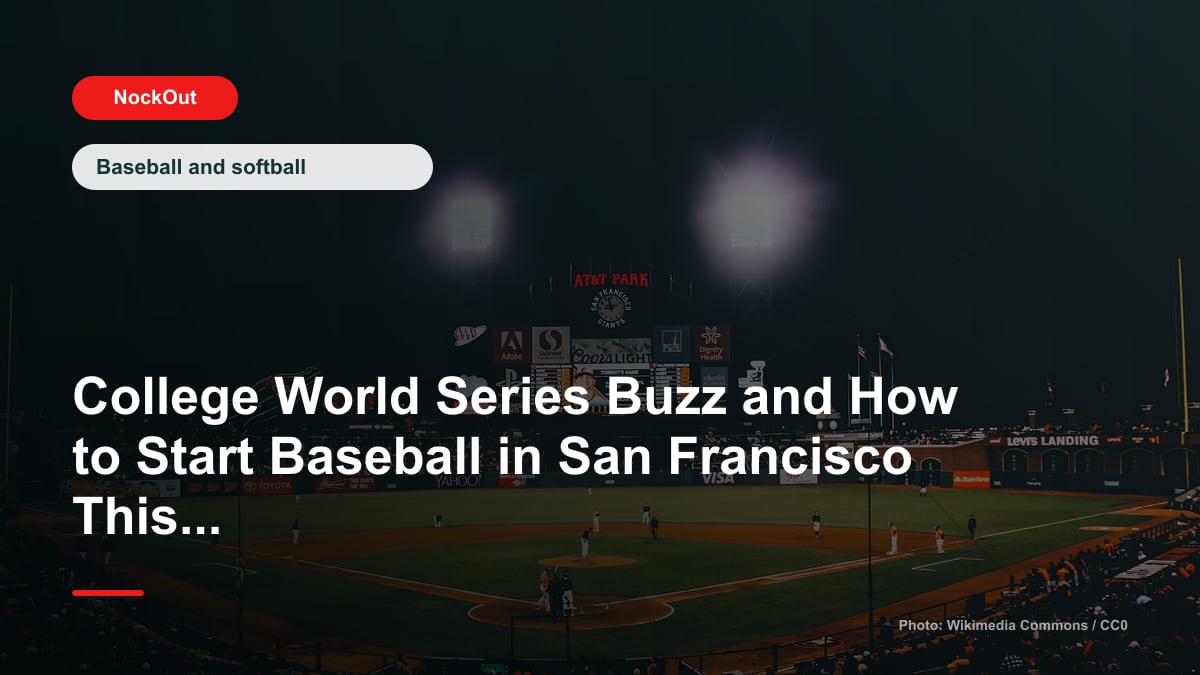
College World Series Buzz and How to Start Baseball in San Francisco This Summer
Subramanya N
Co-Founders
If baseball suddenly feels more visible this week, there is a clear reason. The NCAA's official Men's College World Series page shows the 2026 event running from June 12 through June 21/22 at Charles Schwab Field Omaha, with current championship-week matchups including Texas vs. Alabama, Georgia vs. Oklahoma, North Carolina vs. West Virginia, and Troy vs. Ole Miss. That kind of concentrated schedule does what baseball postseason energy always does: it makes the sport feel urgent again, even for people who have spent most of the spring treating it as background noise.
For San Francisco, that attention matters because baseball here is not only something you watch. It is also a sport with real community infrastructure if you know where to look. The San Francisco Youth Baseball League homepage is currently live with 2026 champions, sign-up information, independent-player options, practice-field guidance, field locations, standings, and a stated mission built with San Francisco Recreation and Parks and SF FLAME. That is exactly the kind of local signal that turns a national trend into something practical.
This post is for the search intent behind terms like baseball in San Francisco, how to start baseball in San Francisco, youth baseball San Francisco, and College World Series baseball buzz. The goal is not to pretend everyone should suddenly become a hardcore baseball person because Omaha is packed this week. The goal is to help you decide whether baseball is a smart summer sport for your household, what kind of entry point makes sense, and how to start without creating unnecessary friction.
 Championship-week baseball works best when it becomes a local routine, not only a spectator mood.
Why Baseball Feels Bigger Right Now
The College World Series creates a different kind of sports interest than a random regular-season week. It compresses baseball into a short window where the sport feels emotional, visible, and easier to talk about. Even people who are not following every roster notice the stadium atmosphere, elimination pressure, and daily rhythm of meaningful games. The NCAA page makes that rhythm obvious by stacking live and recent World Series matchups directly into the championship hub.
That matters because baseball can otherwise feel easy to postpone. It is slower than basketball, less instantly social than pickup soccer, and more equipment-coded than running. Without a loud cultural moment, a lot of people keep baseball in the category of "maybe later." A week like this moves it back into the category of "maybe this summer."
That is the useful Nockout lens. Sports momentum matters most when it lowers the activation energy for real movement. The point of noticing the College World Series is not to become a bracket expert. It is to use a week when baseball feels culturally alive to ask a more practical question: is there a version of this sport that fits my life in San Francisco?
The San Francisco Angle: There Is Already Local Baseball Structure
The strongest local signal is that San Francisco youth and community baseball are not hypothetical. The SFYBL site is active right now with standings, schedules, age-division information, independent-player pathways, practice-field information, and coaching resources. It also states clearly that the league is a collaboration between the San Francisco Recreation & Parks Department and SF FLAME, with volunteers and technical advisors supporting the structure.
That matters for SEO readers and real families for the same reason: structure removes hesitation. When a local baseball ecosystem already has age divisions, field locations, and sign-up flows, you do not need to invent your own baseball life from zero. You can enter something that already exists. The homepage also shows 2026 champions across multiple divisions, which is another sign that baseball participation is not dormant or symbolic. It is active.
Even if your household is not looking for formal league play immediately, the existence of that structure changes the decision. It means baseball in San Francisco is not just one camp, one clinic, or one hard-to-find weekend program. It is an ongoing seasonal system with recognizable on-ramps.
Who Should Actually Consider Baseball This Summer?
Baseball is not the right answer for every person who feels inspired by a major event week. But it is a stronger fit than people sometimes assume, especially for households that want a sport with skill progression, repeatable practice, and a softer intensity profile than constant running sports.
- Choose baseball if you want a skill-building sport with clear structure. Baseball rewards repetition, and many families like that it creates a visible sense of progress.
- Choose baseball if your household wants a community rhythm, not only open play. Leagues, coaches, practices, and standings can make follow-through easier.
- Choose baseball if you want a sport that mixes movement, patience, and teamwork. Not every active routine needs to be maximal cardio to be sustainable.
Baseball may be a weaker fit if what you want most is ultra-low-friction spontaneity. Basketball still wins that category. Running still wins pure simplicity. But for many kids, parents, and returning players, baseball hits a middle zone that is underrated: structured enough to create momentum, but not so chaotic that the experience feels socially overwhelming on day one.
The Best First Step Depends on Your Starting Point
One mistake people make with baseball is assuming there is only one way to begin. In reality, the right first step changes depending on whether you are a parent exploring youth options, a beginner trying to understand the sport, or someone returning after years away.
If you are a parent with a child who wants team structure, SFYBL is the clearest first stop because the site already organizes age divisions, schedules, standings, and field-related logistics in one place. That is a better entry point than trying to search the whole city from scratch.
If you are new to the sport and unsure how serious you want to be, do not start by overcommitting. Start with catch, basic hitting practice, or one small league conversation. Baseball becomes sustainable when the first move is repeatable.
If you are returning after a long break, treat baseball as a rhythm sport instead of a talent test. The point is to rebuild timing, confidence, and consistency. A small weekly routine is more useful than trying to recover your entire old identity in one month.
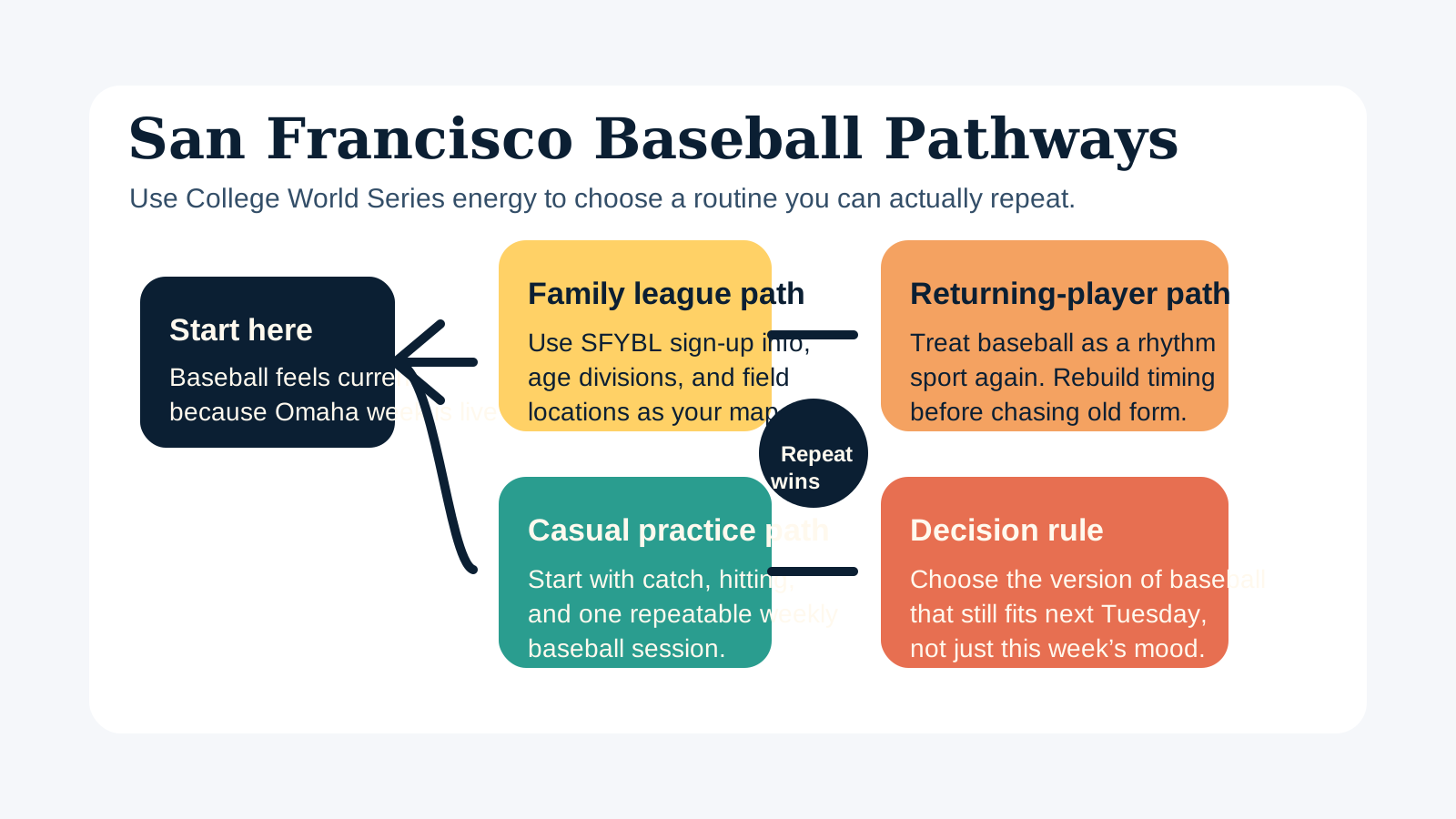 The smartest baseball plan is usually the one you can repeat next week, not the one that looks most ambitious today.
Why Baseball Works Well for Sustainable Active Living
Nockout is not only about joining the loudest sports trend. It is about helping people find active routines they can actually keep. Baseball deserves more credit on that front than it usually gets.
First, it creates built-in return loops. Practices, games, and recurring meetups reduce the burden of self-motivation. Second, it is one of the few sports where progress is easy to feel in small increments. Better contact, cleaner throws, calmer fielding, and stronger game awareness all register quickly. Third, it supports different energy profiles. Not everyone wants every workout to feel punishing. Baseball can still be athletic while leaving room for social learning, patience, and teamwork.
That combination is especially helpful for kids who need a positive movement habit, families who want a shared sport language, and adults who miss organized sports but do not want to start with something that feels too physically extreme. Baseball can sit inside a sustainable week instead of overwhelming it.
How to Use This Week's Baseball Momentum Well
If the College World Series has pulled baseball back onto your radar, keep the action plan narrow.
- Use the current moment as a trigger, not as pressure. Championship baseball is useful because it makes the sport feel alive. That does not mean you need to force a giant decision.
- Pick one local pathway. For San Francisco families and younger players, SFYBL is the most obvious starting point because the local structure is already visible and active.
- Choose one action in the next seven days. That could mean reviewing age divisions, checking league info, organizing one catch session, or mapping the practice habit you want to try.
- Measure by repeatability, not intensity. If the plan works next week too, you chose well.
This is the same principle that applies to every good sports decision. A major event creates attention. A useful local routine converts that attention into something durable. The bridge matters more than the hype.
Final Take
The 2026 Men's College World Series is one of the clearest sports stories of the week, with the NCAA's official championship page highlighting Omaha action from June 12 through June 21/22 and current matchups that keep baseball at the center of the daily sports conversation. In San Francisco, that buzz is actually actionable because local baseball infrastructure is active too. The San Francisco Youth Baseball League is live with 2026 champions, sign-up pathways, standings, schedules, field guidance, and a Recreation and Parks-backed structure that makes the sport easier to enter.
If your household wants a summer sport with skill-building, community rhythm, and a more sustainable pace than constant all-out cardio, baseball is a strong option right now. The best next step is not to romanticize the College World Series from a distance. It is to turn this week's baseball energy into one practical San Francisco routine you can actually keep.